Mobile device management (MDM) solutions let an IT team enroll, configure, lock down, and update a fleet of devices from a single console. Android dominates the dedicated-device segment, kiosk and COSU fleets keep multiplying across retail and hospitality, and regulated industries are once again asking for on-premise deployments after years of cloud being the default. Grand View Research put the global MDM market at 7.67 billion dollars in 2024 and projects it to more than double by 2030.
The ranking criteria for these MDM solutions are simple and verifiable: deployment model (cloud, self-hosted, or both), AOSP support without Google services, pricing transparency, real-world fleet scale, and the cost of migrating off the platform.
1. Headwind MDM
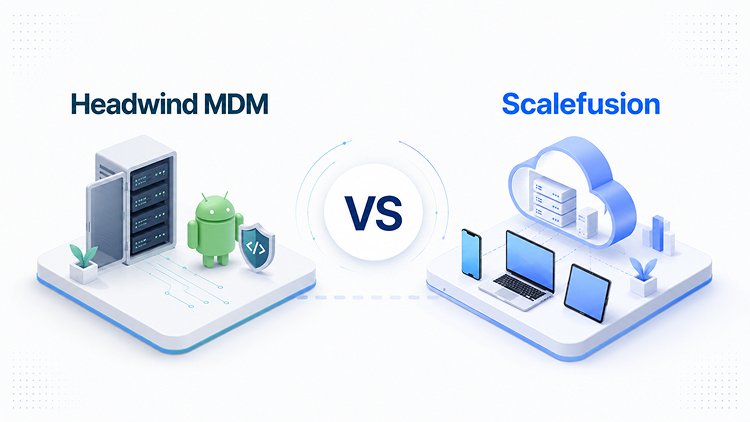
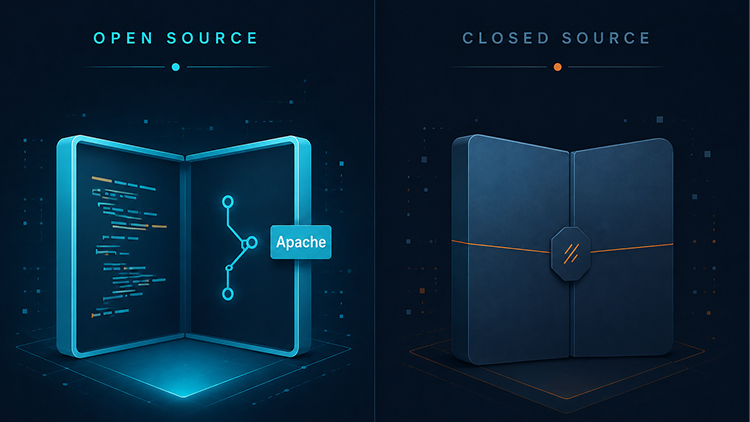
Headwind MDM is an open-source MDM platform for Android, built for teams that want to know exactly where their device data lives and what the management software is doing.
The open codebase is the foundation of everything else. You can read it, audit it, and install the server on your own machine, including networks with no internet access at all. Organizations in banking, utilities, and government run Headwind inside fully air-gapped perimeters, something no other product on this list offers. The same applies to hardware. Headwind enrolls devices running AOSP builds and custom ROMs without Google Mobile Services, which covers a large share of rugged terminals, POS hardware, and signage players that mainstream MDMs simply will not manage. Kiosk mode, remote control, silent app installation, and configuration push are part of the standard toolkit. More than 1 000 paying customers use the platform worldwide, alongside a much larger base running the free Community Edition in production, You can see the project on our GitHub. Typical deployment scenarios range from single-store signage to nationwide logistics fleets.
Self-hosting means the server is yours: installation, updates, and backups land on your sysadmin, not on a vendor SLA. The console favors function over polish, and support runs through documentation and the community forum.
Pricing is fully public. The Community Edition is free, the Premium license is a one-time perpetual payment with no recurring per-device fees, the managed Cloud option is billed per device per year with a two-month trial, and Enterprise terms are custom. Full details are on the pricing page.
Best fit: Android-only fleets in retail, signage, logistics, or closed networks where on-premise control, AOSP support, or a fixed budget decides the purchase.
2. SOTI MobiControl
SOTI MobiControl is enterprise software built for managing industrial device fleets.
Remote control on Android is among the best in the category, fast enough that help desks resolve field incidents without devices having to come back to the shop. Integrations with Zebra, Honeywell, Datalogic, and other rugged OEMs go deeper, down to firmware and peripheral management. MobiControl covers Android, iOS, Windows, macOS, and Linux from one console and scales comfortably into the tens of thousands of devices. SOTI remains one of the few large vendors offering a genuine on-premise deployment alongside its cloud offering.
The downsides are on the commercial side. Pricing is quote-based, sold annually through sales teams and partners, and the product is consistently positioned at the premium end of the market. Smaller fleets end up paying enterprise prices for capabilities they never switch on. Implementation is a project, not an afternoon: customer reviews describe rollouts measured in months, and administering the platform well takes dedicated, trained staff. For a 50-device fleet, this is not the right tool.
Pricing: not publicly listed. Budget for a premium per-device annual subscription obtained through SOTI sales or a certified partner.
Best fit: enterprises running thousands of rugged devices in transportation, logistics, healthcare, or field service, with the budget and headcount to match.
3. Esper
Esper approaches device management the way a DevOps team approaches servers, and that framing reflects exactly who it is built for.
Where traditional MDMs give you a console, Esper gives you infrastructure. Full APIs and a device SDK, Blueprints for declarative configuration, Pipelines for staged software rollouts, rich telemetry, and no-touch provisioning. The AOSP story here is strong too: Esper ships its own Android-based OS for supported hardware, so custom and non-GMS devices are first-class citizens. For kiosks, point-of-sale systems, and custom hardware run by an engineering team, the toolset is a solid fit.
The constraints are structural. Esper is cloud only, with no self-hosted option, which rules out air-gapped and strictly on-premise scenarios. The platform assumes technically capable operators: a generalist sysadmin shop will pay for API depth it never touches. Some customers report that the per-device cost becomes a pain point once a fleet grows from hundreds into thousands.
Pricing: a free tier covers up to 50 devices. Paid plans are per-device subscriptions, with third-party listings placing the published tiers between roughly 2 and 6 dollars per device per month and enterprise pricing by quote.
Best fit: product and engineering teams shipping dedicated-device fleets who want to manage them like a CI/CD pipeline, provided cloud hosting is acceptable.
4. Scalefusion
Scalefusion is a cloud MDM aimed at small and mid-sized fleets that need to get under management quickly.
Coverage spans Android, iOS, macOS, Windows, and Linux, with kiosk lockdown for dedicated Android devices and standard configurations for BYOD and corporate-owned scenarios. User reviews consistently rank its support team near the top of the MDM category, and a 14-day trial lets you validate the product on your own fleet before paying anything. For an IT manager who needs phones, tablets, and a few laptops under control by Friday, there is not much to argue against.
Scalefusion is cloud only, so self-hosting and closed networks are off the table. Advanced automation and complex compliance workflows are thinner than what SOTI or the Microsoft stack offer at enterprise scale. Its Android management is built on Android Enterprise, which assumes GMS-certified hardware: AOSP devices and custom ROMs are largely outside its reach.
Pricing: public, starting at 2 dollars per device per month billed annually, with tiered plans rising toward custom enterprise pricing.
Best fit: small and mid-sized businesses with mixed-OS fleets that want fast, inexpensive cloud management and no sales calls.
5. Hexnode UEM
Hexnode UEM closes the list. It’s a balanced mid-market platform that covers an unusually wide range of operating systems for its price class.
Alongside Android, iOS, macOS, and Windows, Hexnode manages Apple TV and Amazon Fire OS devices, which makes it a practical choice for signage and hospitality fleets where consumer hardware is used for business purposes. Kiosk and lockdown features are mature, the console is approachable for a non-specialist admin, and the support team has a strong reputation in user reviews. Pricing is public, broken down by tiers, and easy to model in a spreadsheet before talking to anyone.
The caveats mirror the segment. Hexnode is cloud only. Features are split across five plans, and the capabilities you actually need in practice, including remote control on Android, often live in the upper tiers, so the real per-device cost runs higher. There is a 15-device minimum. Like Scalefusion, Hexnode’s Android support is built on Android Enterprise and GMS-certified hardware, leaving AOSP and custom ROMs unsupported. In practice, you cannot even install the Hexnode MDM agent on devices without first registering your company with Android Enterprise. Reporting and automation depth trail the enterprise platforms. The full feature-by-feature breakdown is on the Hexnode alternative page.
Pricing: public, starting around 2.20 dollars per device per month, with roughly 10 percent savings on annual billing.
Best fit: mid-sized organizations with mixed device types, including Fire OS and Apple TV, looking for the best feature-to-price ratio in the cloud.
Key Parameters: MDM Solutions Compared
| Vendor | Deployment | AOSP / non-GMS support | Starting price | Best for |
|---|---|---|---|---|
| Headwind MDM | On-premise (incl. air-gap) or cloud | Full | Free (Community Edition) | Android-only fleets needing control and predictable cost |
| SOTI MobiControl | Cloud or on-premise | Partial (OEM-dependent) | Quote-based | Large rugged, multi-OS enterprise fleets |
| Esper | Cloud only | Strong (own AOSP-based OS) | Free tier up to 50 devices | Engineering-led dedicated-device fleets |
| Scalefusion | Cloud only | Limited (GMS required) | From $2/device/month | SMBs with mixed-OS fleets |
| Hexnode UEM | Cloud only | Limited (GMS required) | From $2.20/device/month | Mid-market fleets incl. Fire OS and Apple TV |
Why Headwind MDM Is Worth Choosing
Most companies evaluating MDM solutions in 2026 are doing so for the exact reasons Headwind wins: data has to stay in-house, the fleet runs on Android including AOSP-based devices, and the IT budget cannot absorb another per-device subscription. Headwind covers all of that for free or with a single one-time payment. SOTI remains the choice at enterprise scale for rugged device fleets, Esper is for engineering teams comfortable working in the cloud, and Scalefusion and Hexnode are for mixed fleets where Android is secondary. If none of those scenarios is yours, start with Headwind.
Disclaimer: All trademarks mentioned in this article are the property of their respective owners. References to these trademarks are for informational and comparative purposes only and do not imply any affiliation with, endorsement by, or sponsorship from the trademark holders.