Harmonie Health is an Australian assistive technology company. It places a connected Health Hub – an Android-based device – into the homes of older people and people living with chronic conditions. The Hub gives the person, their family, and their care team a single, current view of medications, appointments, documents, and health history.
From the start, Harmonie Health knew a standard tablet wouldn’t work. The Health Hub lives inside a private home, holds a person’s medications and health information, and can be handled by whoever is delivering care that day. That combination raised two concerns the company heard repeatedly, both from care providers and from its own risk assessment: what happens if a device goes missing from a home, and what stops a support worker from using it for something other than care.
Scaling made the problem sharper. Every device needed the same setup, the same updates, and the same lockdown to its intended purpose – and doing that by hand on each unit wasn’t going to hold up as the fleet grew. That search led the company to Headwind MDM, which it adopted from day one after a careful review process.
Why Headwind MDM Specifically
Control over health data came first. Harmonie Health handles sensitive personal health information and needs to control exactly where that data sits and who can reach it – a self-hosted MDM made that possible.
“Operating a fleet of devices that our users entrust with personal health information makes security a priority – Headwind MDM’s open-source core means we can be confident about that security and allows us to self-host to maintain data sovereignty.”
Luke Godeassi, Head of Engineering, Harmonie Health
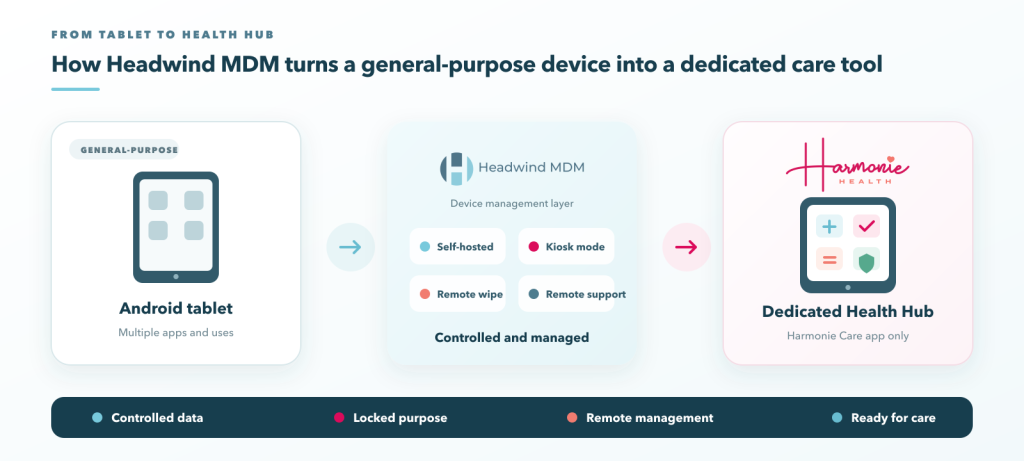
Kiosk mode solved the misuse concern directly: locking each Hub to the Harmonie Care app only means there’s nothing else on the device to use it for. It turned out to matter beyond security, too – in Australia, whether a device qualifies as a dedicated health device, rather than a general-purpose tablet, can determine whether it’s eligible for government funding.
Remote wipe addressed the theft and loss concern. If a Hub goes missing, Harmonie Health can remove the health data on it rather than hope for the best.
Remote support helps the team fix problems without a home visit. Device monitoring adds an early warning for care. Harmonie Health can see which Hubs are in active use. A Hub that has gone quiet may mean the person has stopped checking their medications or appointments. The care team can then follow up before a dose or a visit is missed.
Cost was the final factor. As an early-stage company deploying into homes across Australia, Harmonie Health needed something that could scale without a per-seat cost that punishes growth.
Day-to-Day Use
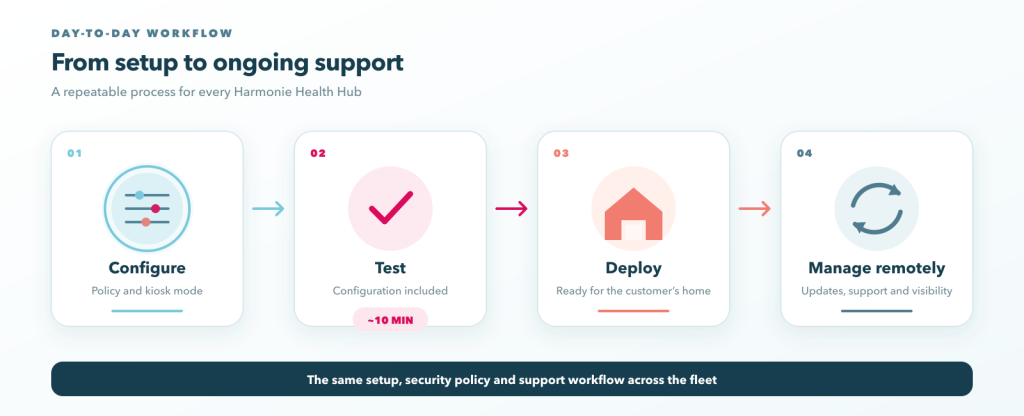
Devices are configured on-site before shipping to customers. With Headwind MDM, a full deployment – configuration and testing included – takes about 10 minutes. From there, the team pushes updates and provides remote support using the same set of tools: policy enforcement, kiosk mode, and remote troubleshooting. Update visibility has been particularly useful – Harmonie Health can confirm whether an update installed successfully, and fix it remotely if it didn’t.
How MDM Turned a Tablet Into a Fundable Health Device
For Harmonie Health, the MDM shaped the product itself. Kiosk mode locks each Hub to a single health purpose. Families can trust that the device holds their health data securely and serves only their care. Funding bodies can see a dedicated health device rather than a general-purpose tablet. In Australia, that difference can decide whether the Hub qualifies for government funding.